Entry 108 – A letter for 10 years later. – updated one year later (10%) 9 more years to go.

What will the world be like?

I think the majority of my blog entries aged kindly for me. There were not many controversial topics, travelling and volunteering are fun experiences to share from 2010 (15!! years ago). I am new to a parenting blog. Let’s write about what will happen in 10 years. Hopefully, I will be 10 years older. I am not sure what type of world will be after 10 years, better or worse, but it is the only world we will have. Labour are in power. Politics are more divided than ever. So let’s summarise what I am doing and revisit in 10 years’ time.

After one year, I only kept the BE A Scholar Tuition project for my young children. I might be asking for a lot of qualities; have their own artistic style in a portfolio, music around grade 8 with two instruments at 13, inspired by the Sciences, read and write proficiently, multi-lingual, have numerous passions, excel at Mathematics, enjoy sports and be confident in themselves. The focus is how to gather the motivation to reach them.

In 10 years’ time

BE a Scholar Tuition

Update 1 year on – I developed the concept further one year on. The value is more clearer and key performance indicators are well defined. The King’s scholarship’s academic level defined the goal of a competitive private education outcome at 13 years old. Assuming a private education at £24k a year for 5 years from 8 years old. I will provide an alternative path to reach that level for selected subjects. £120k does not guarantee a child’s success at scholarship level for all 8 subjects. The hypothesis is that with parental support, child’s motivation and a fraction of the subject, we can achieve a highly competitive level.

I hope to create an environment where people can succeed in whatever they want to do. I believe that will lead to a better and kinder world. So I continued with my education blog, BE a Scholar Tuition. Each child’s aspiration is the focal point and the focus is to make studying enjoyable to reach their goals. So in 10 years’ time, I hope lots more people grow up and able to achieve their aspirations. I have created a group to do that.

McRobotface Club

This year has had some ups and downs for the Robotics Club. One-off sessions were more popular. I think the expectation is that Robotics should be part of the National Curriculum offered by schools, which I agree with to an extent. However, I think technology would have moved on by the time the National Curriculum is updated, and that local schools would have the resources to implement it properly and unlikely to happen with this government. I wanted to guide kids to explore emergent behaviours, which I think uses the full potential of the educational robots. My aspiration level is to reach the Harvard Postdoc, inspired by my PhD supervisor. I am going to put this on hold. However, BE a Scholar Tuition may revisit this project.

I created the McRobotface Robotics club to introduce robotics to the local families. The most successful ones are the family sessions, where parents enjoyed playing the educational robots with their 5 to 7-year-olds. The parents work with their children and the children can show remarkable concentration time from 30 to 1 hour. That is what parents remarked. So hopefully, these kids will be inspired into robotics and create robots that benefit the society.

Meetup groups

Update – These are closed down because they are costly to run. Meetup organising requires a budget and finance. I gave it a go. I played more chess with my 8 yrs old. I travelled with my 3 yrs old, which is really fun.

I am also trying to be more sociable both for my 2 year-old and my 7 year-old through Meetup groups. Check out this Meetup event from “Dads with 3 year olds or younger”. I am determined to keep her with me during these formative years. So I can provide the social aspect and not constrained to the same nursery or school.

“Dads with 3 year olds or younger”:– Link to Group

I also created a Family board game group for the older kid. Link to group

I also play my part at Little Plaza, which is our aim to create a Little corner for our children to grow up, with arts, music, STEM, and many possibilities. http://www.littleplaza.co.uk So I do wonder what I will write in 10 years time.
Entry 106 – My Parenting / Education Blog so far

I am an Asian parent as mentioned before so naturally, I take my destiny / blessing / curse competitively so let’s recap what I have done.

  1. Looked at King’s Scholarship 13 plus for Eton.
    • I understand what academic standards colleges like Eton are looking for.
    • What is the value?
    • Importance of sports and music to supplement academic achievement
  2. My conclusion is to make the first interview / audition a priority. If one is successful at their first interview, everything else that lead up to the interview seems to be less important.
    • Preparation provides the ingredients and the classical arrangement is the recipe, based on Classical Rhetoric.
    • Understanding failure is part of the process and not the end.
    • What do you want to be part of life? For example, 20% music.
  3. Created after-school activities at Little Plaza with a high standard of input (e.g. from research groups and top university graduates). Experts are out there and talk with passionate people.
    • Reading club with 4 variants of the book review, read a lot of books will prepare writing.
    • Everyday science club to introduce the Scientific Method from the basics to Harvald Post Graduate paper writing inspired by Prof. George Whitesides
    • How to make Maths fun – UKMT to focus on critical thinking. Maths Challenge Questions tend to have multiple way of solving them, which encourage mind-mapping.
  4. Read research papers on children’s cognitive development and discuss with academics at the University of Edinburgh for their insights.
    • Different stages of cognitive development will match different aspects of brain function. Use Piaget’s model as the starting point to focus on suitable things for that age.
    • A balance of different topics takes advantage of brain lateralisation and information causality.
  5. Science of learning, how to maximise grade improvement for every 30 mins of study.
    • Mind mapping and the acausal nature of information play a key part in representing the world around us.
    • Current Difficulty, Context Awareness, Confident Mindset, Concentration and Knowledge Level are important variables to tune for efficient learning.
  6. Crowdfunding to launch the McRobotface Robotics Club
    • Educational robots are widely available (to purchase) but not in use.
    • The next generation will encounter robotics and artificial intelligence, which may even render coding less important. AI can code too.
    • A journey from a single robot to a cluster of robots and robot competitions.
    • Review what the world has to offer, as these robots / toys are already designed.

Entry 105 – The Second Law of Thermodynamics on McRobotface Robotics Club.

#stem #robots #robotclubs #kidsactivities #childdevelopment

Introduction to McRobotface Robotics Club

The McRobotface Robotics Club will start in July 2024. The current forecast is a fund that makes a partial launch possible. Therefore, the club will be more suitable for smaller groups and more 1 to 1 sessions. The educational robots will be suitable for children ages 4 to 11. The McRobotface Robotics Club is about getting children to learn about robotics via playing in a structured environment.

The McRobotface Robotics Club journey

The McRobotface Robotics Club will become an integrated STEM development service provider for children aged 4 to 13. The McRobotface Robotics club will provide the robot hardware from different manufacturers (starting from Vex due to the age range) then the next step will be to add Robotical’s Marty, which is a humanoid and a more expressive robot. The training documentation will be reviewed and adapted for the children and instructions for their accompany adults. The key value is that the magnitude of entry is greatly lowered into hundreds of pounds to tens for parents and eventually competition will reduce from thousands of pounds to a few hundreds for schools and groups.

Every journey starts with taking the first step, crowdfunding provided the first step and will see how the community react.

The Second Law of Thermodynamics applies.

These educational robots are like LEGOs and everything else subjected to the Second Law of Thermodynamics. The Second Law of Thermodynamics basically states that the entropy either increases or stays constant in a given process. Entropy is essentially a measure of disorder and in this case, when the educational robots are new, the entropy is at its lowest. Entropy will increase as soon as the packaging is removed. The process is for the kids to play and learn about robotics. after every play, the best case is for the robot to stay “nearly new” and the entropy stays constant. However, there is a chance that parts are broken and the entropy increases. The Second Law of Thermodynamics is in action here.

I will have to spend time and resources to maintain the robots. Adults are required Instructions are required to enable the educational robots to be used properly and to deliver the learning points. Therefore the challenge is to optimise the time and resources, and training to ensure entropy stays constant.

Entry 98 Reflections

Play hard, work hard. In my opinion, the world is a playground. Hence, I tried my luck at Formula 1, Space, Helicopters, tiltrotors, travelling, and NGOing. I enjoyed each experience. I just don’t learn fast enough. Now, I am more grown up and wiser, as shown by the PhD. The vast amounts of knowledge to be consumed and learnt are simply too much for a lifetime. Timing is such as important factor… So often, I was in the right place at the wrong time.

Good books for any systems engineer

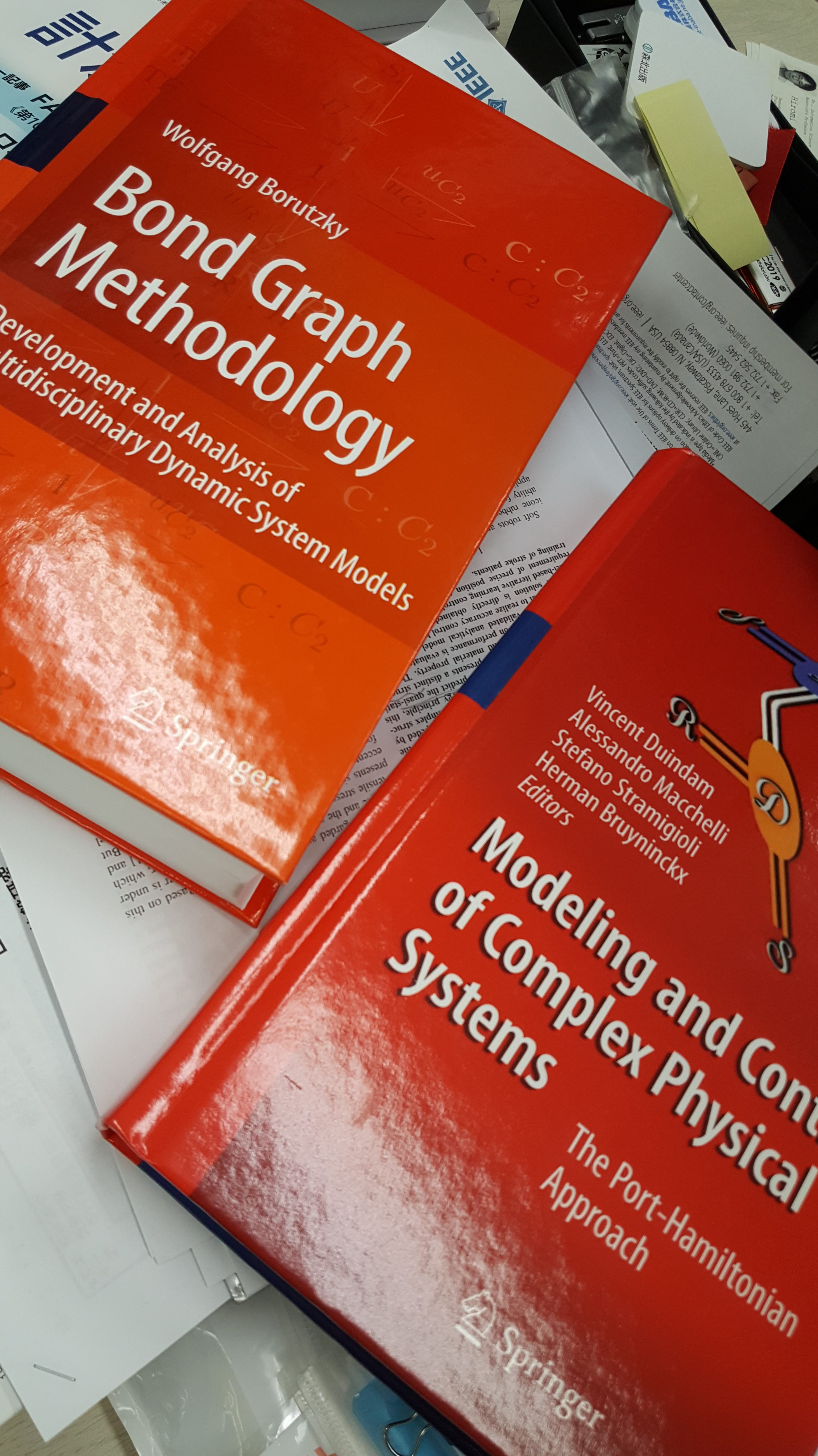
In 2008, if only I could apply the concepts gained through my PhD. Aerodynamics would have been engaging with the port-Hamiltonian approach. I was limited by Cartesian, which is so 1 dimensional in thinking. If my thinking included Lagrangian, and in the context of acausal dynamic simulation. That click would have been a lot more quicker. There would have been less confusion during my time there. (What am I?, Why am I?, Where am I?, Who am I?)

In 2009, I was proficient in the statistical energy approach, but I only encountered health usage monitoring systems in helicopters in 2011 and machine learning in 2016, pattern recognition was there. These concepts would have impacted the graduate mechanical vibration engineer role at the European Space Agency. That would have been fun.

In 2010, if only I hang out at the Mountain View Hotel buffet in Nepal more often to build my NGO contacts, I could have had a different career. I wanted to get a UN passport, to be a citizen of the world, make it a better place (I was naive). I was very introvert those days.

I collected exciting topics, from driveline simulation of a Formula 1 car, helicopter transmission vibration analysis, flight simulation data conditioning, tilt-rotor transition assembly, to machine learning, thermodynamics and robotics. All these topics are really challenging to master, I needed years to really understand the Acausal approach to simulation when I needed months. In hindsight, My thinking was very causal. I.e. each knowledge / subject was within close proximity of each other, i.e. one theory lead to another. Perhaps a larger mind map or a big-picture understanding would enable me to be a better version of myself. I guess hindsight is a wonderful thing, which topics would you like to know for your past self? Lottery numbers and football scores are not eligible and are clearly against the ethics of time travel.

My favourite role was conditioning the test flight data to make sure it is compatible with the flight simulator, which met the Joint Aviation Regulation requirements. Pilots do not need to stick an “L” plate onto the helicopter. The first moment when they are in the cockpit can deal with all the required eventualities.